-
Hajipur, Bihar, 844101
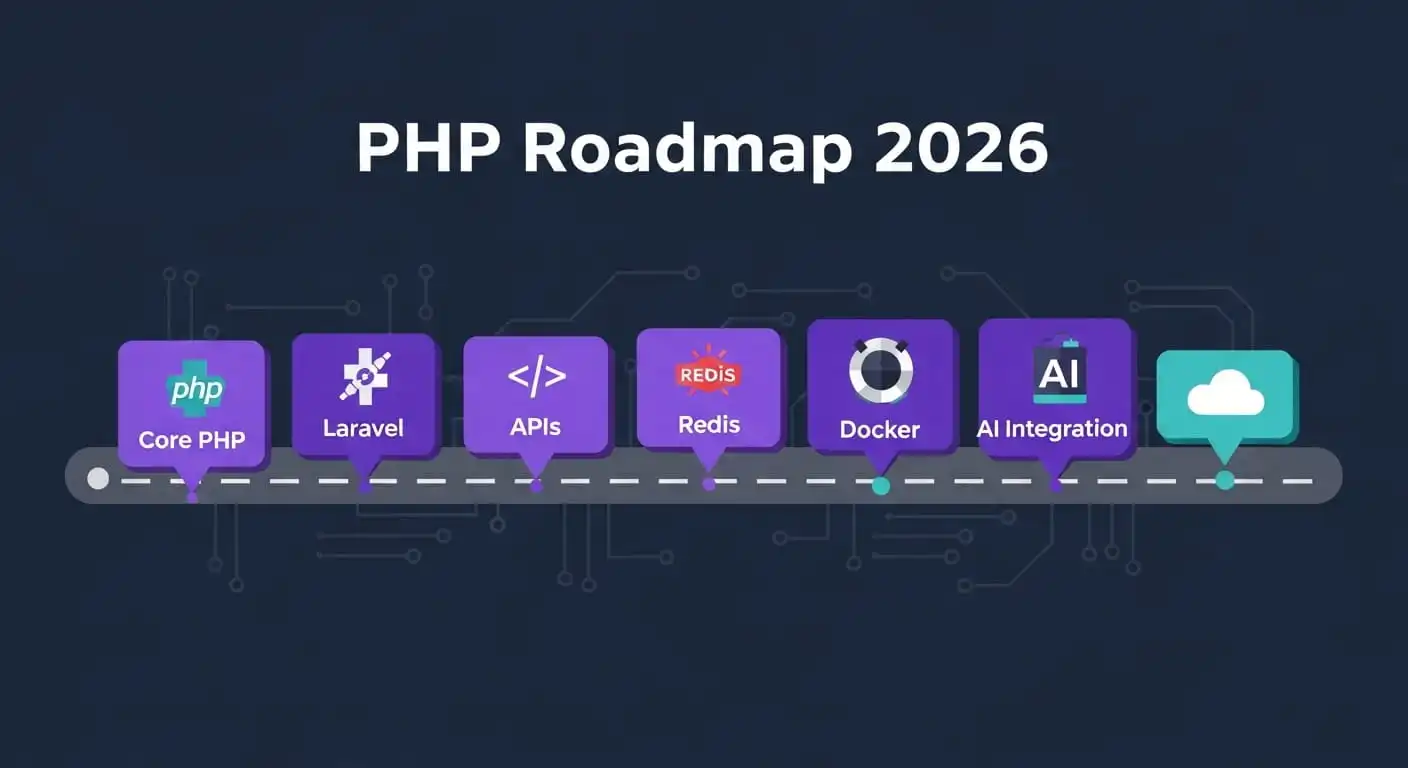
PHP Developer Roadmap 2026: From Core PHP to AI-Powered Backend

Published By
Bikki SinghIf you are someone who started with PHP just to build a contact form or a basic CRUD app, and now you are wondering whether PHP is still worth investing time in — this blog is written for you.
The short answer: yes, PHP is very much alive. The longer answer is that the PHP ecosystem in 2026 looks nothing like it did five years ago. The developers who are thriving right now are not just the ones who know echo and mysqli_query. They are the ones who have mastered Laravel's internals, built async job queues, containerized their apps with Docker, integrated Redis for caching, and started connecting their backends to AI APIs.
This roadmap breaks down exactly what skills a PHP developer needs in 2026 — from the ground up — in the order that actually makes sense to learn them. If you are completely new to programming and still figuring out where to begin, start with our step-by-step guide on how to learn coding from scratch before diving into PHP specifically.
Stage 1: Core PHP — The Foundation You Cannot Skip
Before jumping to frameworks, your raw PHP fundamentals need to be solid. Not just "I know what a variable is" level — we are talking about the kind of understanding that helps you debug a production issue at 2 AM without losing your mind.
What to focus on:
PHP 8.x brought changes that actually matter. Named arguments, match expressions, fibers, enums, readonly properties — these are not just syntactic sugar. They change how you structure application logic. If you are still writing PHP the way it was written in 2015, you are building on a weak foundation.
Get comfortable with:
- Object-oriented programming — not just creating classes, but understanding SOLID principles in real scenarios
- Type declarations and strict types
- Error handling with exceptions and custom exception classes
- Namespaces and autoloading with Composer
- Traits and interfaces — when to use which
- PHP 8.1+ features like enums, fibers, and intersection types
One practical starting point that many developers overlook: knowing the difference between basic PHP functions like echo vs print in PHP is actually a good signal of how carefully you have read the language spec. These small things matter more than people admit.
One thing most tutorials miss: spend time understanding how PHP actually works — the request lifecycle, how the CLI version differs from the web server version, and what happens under the hood when you run a script. This knowledge will make everything else easier.
Stage 2: Laravel — The Framework That Defines Modern PHP
Laravel is not just popular — it is the standard. If you are applying for a PHP backend role in 2026, knowing Laravel is not optional. It is the baseline expectation.
But here is where most developers go wrong: they learn Laravel's happy path and stop there. They know how to use Eloquent for basic queries, set up routes, and return JSON — and they think that is enough. It is not.
What deep Laravel knowledge actually looks like:
Service Container and Dependency Injection — Understanding how Laravel resolves dependencies, how to bind interfaces to implementations, and how to use the container to write testable code. This is the core of Laravel's architecture.
Eloquent at depth — Relationships, eager loading vs lazy loading, query scopes, model observers, casting attributes, and writing raw queries when Eloquent becomes a bottleneck. If you are working with MySQL heavily, understanding when to use raw queries vs Eloquent requires you to know your database well. Our breakdown of MySQL vs PostgreSQL performance and features is a useful reference when choosing and working with your database layer in Laravel.
Middleware and request lifecycle — How a request moves from the web server through Laravel's kernel, through middleware stack, to your controller and back. This understanding is essential when you need to add authentication, rate limiting, or request logging.
Events and Listeners — Decoupling your application logic using Laravel's event system. When a user registers, 10 things might need to happen. Events let you handle this cleanly.
Policies and Gates — Authorization in a way that scales. Not just middleware-based auth, but granular, resource-level permission handling.
Also get familiar with Laravel's testing tools — PHPUnit integration, HTTP tests, database factories, and how to write meaningful feature tests.
Stage 3: API Development — This Is Where the Real Work Happens
Almost every modern PHP application is either consuming APIs or serving as one. Building good APIs is a skill that separates mid-level developers from senior ones.
RESTful APIs with Laravel:
Know how to design clean resource-based endpoints. Understand HTTP status codes — not just 200 and 404, but when to use 201, 422, 401 vs 403, and 429. Return consistent response structures using API Resources in Laravel. Handle validation with Form Requests and return meaningful error messages.
API versioning — this is something most junior developers ignore and then regret when they need to make breaking changes. Learn how to version APIs through URL prefixes or headers.
Authentication for APIs:
- Laravel Sanctum for SPA and mobile app authentication
- Laravel Passport when you need full OAuth2 server capabilities
- JWT tokens and when they make sense
GraphQL:
Not every project needs it, but understanding GraphQL is increasingly expected for senior roles. Lighthouse PHP is the go-to package for adding GraphQL to Laravel apps. Know the difference between REST and GraphQL trade-offs — they solve different problems.
Rate limiting and throttling:
Production APIs need protection. Laravel's built-in rate limiter is good, but know how to customize it per user, per route, and per IP. Combine this with Redis for distributed rate limiting across multiple servers.
Stage 4: Queues and Background Jobs — Async PHP
One of the biggest performance mistakes PHP developers make is doing heavy work synchronously inside a request cycle. Sending emails, generating PDFs, calling external APIs, resizing images — none of this should block the user's response.
Queues are the answer.
Laravel's queue system is excellent and relatively straightforward to get started with. But production queue setups have nuance.
Queue connections to know:
- Database queues — fine for low traffic, but not for scale
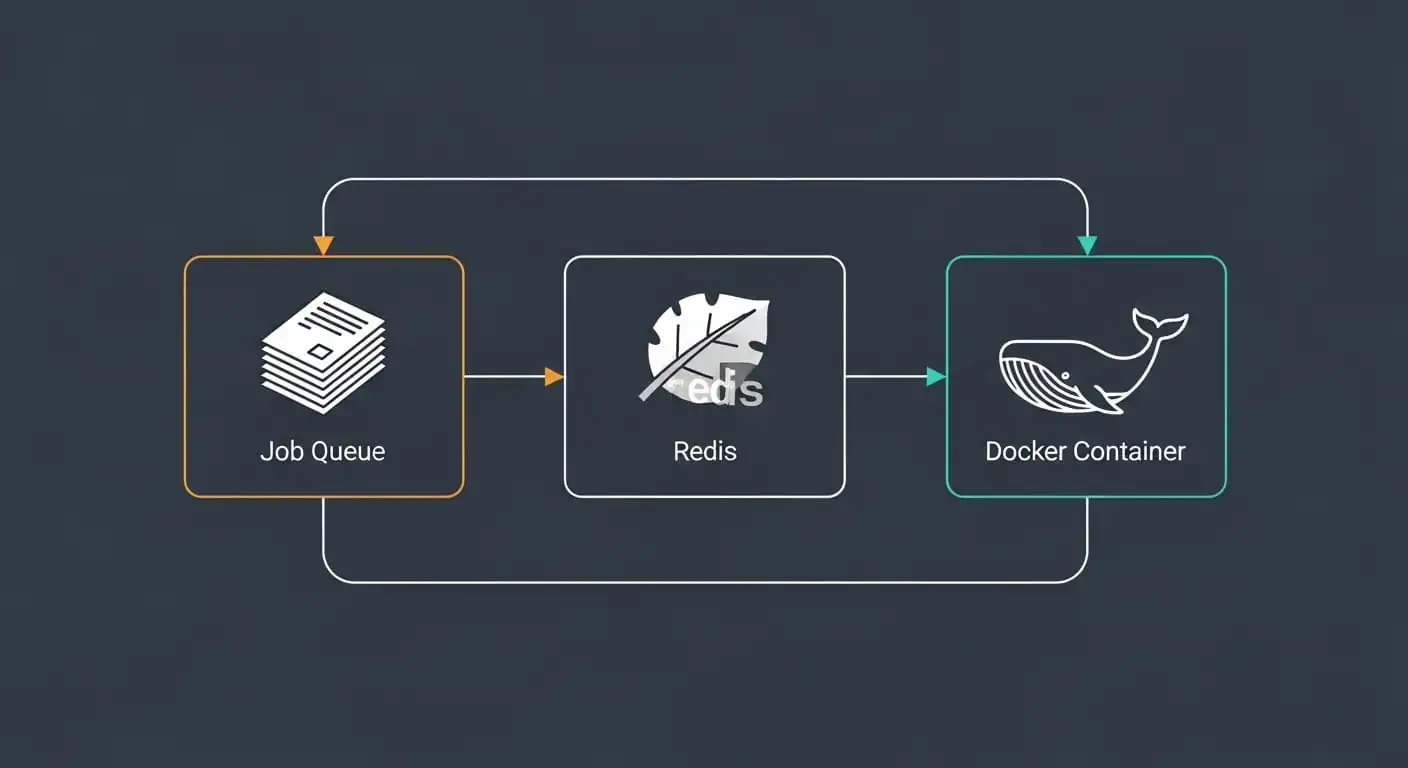
- Redis queues — fast, reliable, the practical choice for most production apps
- Amazon SQS — when you are in AWS and need durability
What to actually learn:
Dispatching jobs, chaining jobs, batching jobs with Bus::batch(). Job retries, backoff strategies, and handling failed jobs. The failed_jobs table and queue:failed command will be your friend when something goes wrong in production.
Horizon — If you are using Redis queues, Laravel Horizon is the monitoring dashboard you need. Learn how to configure it, set worker counts per queue, and set up alerts.
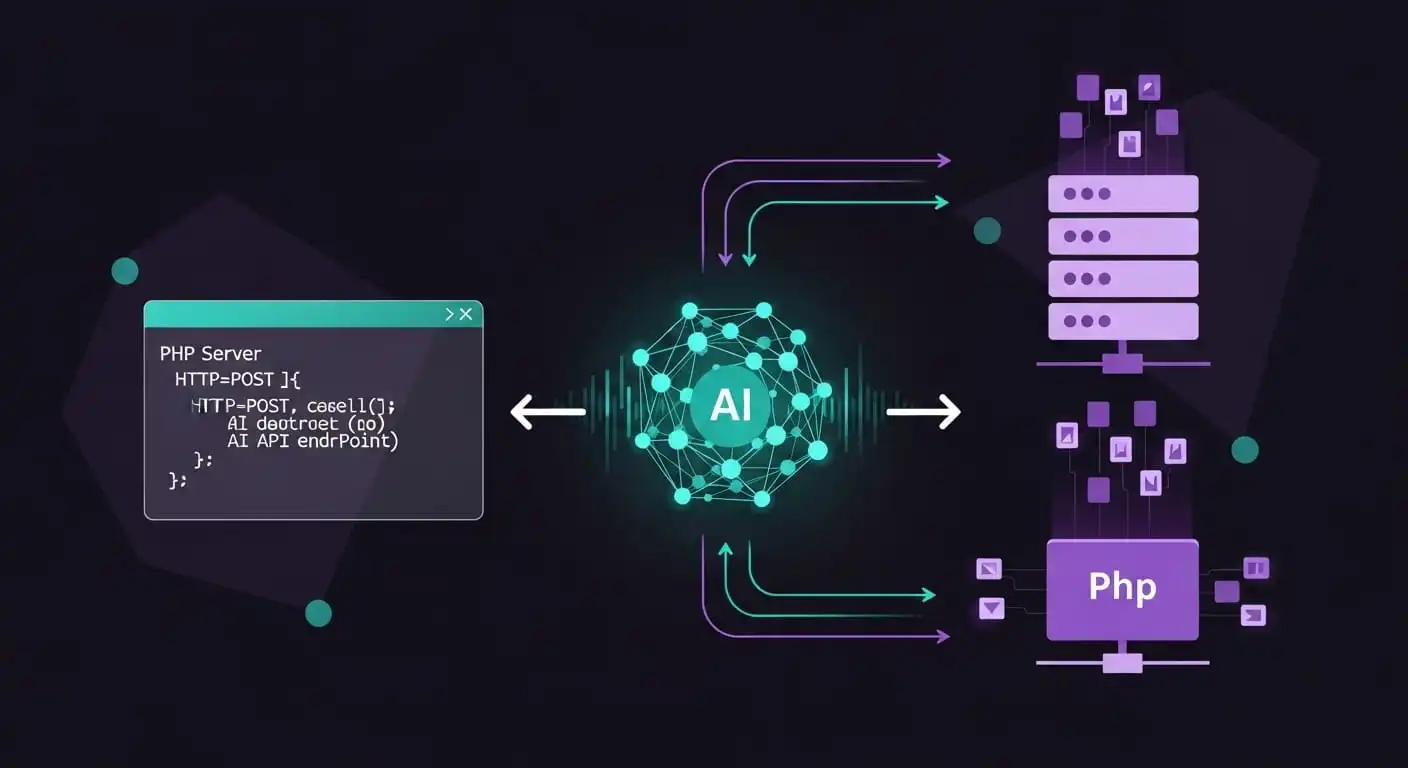
Queues for AI workloads — this is increasingly relevant. When you call an AI API (like OpenAI or Anthropic) from your PHP backend, the response can take 10-30 seconds. You never want this in a synchronous request. Always dispatch AI calls as queued jobs and use webhooks or polling to return results to the client.
Stage 5: Redis — Caching, Sessions, and More
Redis shows up in multiple places in a modern PHP stack, and understanding it well gives you a genuine edge.
Caching with Redis:
The most common use case. Cache database query results, API responses, computed values. Laravel's cache facade makes this clean, but understand the underlying concepts — cache invalidation strategies, TTL management, cache stampede prevention.
Session storage:
Redis as a session driver is faster and more scalable than file-based sessions, especially when you have multiple application servers.
Rate limiting:
As mentioned in the API section, Redis-backed rate limiting is how production apps handle it.
Pub/Sub:
Redis supports publish/subscribe messaging. While Laravel's queue system handles most async needs, Redis Pub/Sub is useful for real-time features — like pushing events to a WebSocket server.
Key things to get comfortable with:
- Setting up Redis with Laravel (config, .env variables)
- Cache tags for grouped invalidation
- Atomic operations and how to prevent race conditions using Lua scripts or Redis locks (
Cache::lock()in Laravel)
Stage 6: Docker — Your App Needs to Run Everywhere
If you are still working without Docker in 2026, you are creating headaches for yourself and your team. "Works on my machine" is not a deployment strategy.
Why Docker matters for PHP developers:
Consistent environments across local, staging, and production. Easy onboarding for new team members. Isolation between projects with different PHP versions. And it is the foundation for cloud deployment.
What to actually learn:
Start with understanding Dockerfiles — how to write one for a PHP application, how to choose the right base image (official PHP-FPM images), how to install extensions, and how to configure PHP settings.
Docker Compose is where your local development setup lives. A typical PHP project needs containers for PHP-FPM, Nginx (or Apache), MySQL or PostgreSQL, and Redis. Understand how to define services, manage volumes for persistent data, and set up networking between containers.
For Laravel specifically:
Look at how Laravel Sail works. It is Laravel's official Docker development environment and a great reference for understanding how PHP containers are structured.
Multi-stage builds — learn how to use them to keep your production Docker images lean by separating build-time dependencies from runtime.
Stage 7: AI Integration — The Skill That Is Separating Developers Right Now
This is the section that was not in any PHP roadmap two years ago and is now arguably the most valuable skill you can add.
Every serious product team is asking: how do we add AI capabilities to our backend? For PHP developers, this means knowing how to integrate with LLM APIs — primarily OpenAI, Anthropic's Claude API, Google's Gemini, and others.
If you come from a Python background, you already know how dominant Python is in the AI space — our guide on best Python libraries for AI and machine learning gives you a solid picture of the ecosystem PHP developers are now connecting to from the backend. Understanding that world helps you build better integrations from PHP.
The practical skills:
Making API calls to AI services — OpenAI has an official PHP SDK. Anthropic's API is straightforward to call using Guzzle or Laravel's HTTP client. Start by building simple completions and chat endpoints.
Prompt engineering from the backend — writing system prompts, managing conversation history, controlling output format with JSON mode or structured outputs. This is a backend skill, not just an AI skill.
Streaming responses — AI APIs can stream tokens as they are generated. Implementing server-sent events (SSE) in Laravel to stream AI responses to your frontend is a real feature that users actually want.
Vector databases and RAG (Retrieval-Augmented Generation) — This is where it gets serious. If you want to build AI features that use your own data (product catalogs, documentation, customer records), you need to understand how to generate embeddings, store them in a vector database (Pinecone, Weaviate, or pgvector in Postgres), and retrieve relevant context before calling the LLM.
PHP packages to know:
openai-php/client— official OpenAI PHP clientprobots-io/prism— a growing PHP package for working with multiple LLM providers- Laravel Pennant for feature flags (useful when rolling out AI features gradually)
Async AI calls with queues — as mentioned earlier, always put AI API calls in background jobs. Add retry logic for rate limit errors. Store results and notify users via email or push notification.
Stage 8: Cloud Deployment — Getting Your App to Production
Writing code is one thing. Deploying it reliably, scaling it, and keeping it running is another skill set entirely.
Managed hosting vs. raw cloud:
For most projects, managed options are the right starting point:
- Laravel Forge — provisions and manages servers on DigitalOcean, AWS, Linode, or Vultr. Handles Nginx config, SSL, deployment scripts, queue workers, and cron jobs. This is the practical choice for most teams.
- Laravel Vapor — serverless deployment on AWS Lambda. No servers to manage. Great for apps with unpredictable traffic spikes.
Raw AWS skills (for senior roles):
EC2 for compute, RDS for managed databases, ElastiCache for managed Redis, S3 for file storage, CloudFront for CDN, and SQS if you are using AWS queues. Understanding how these services connect is what separates developers who can architect systems from those who just write application code.
CI/CD pipelines:
GitHub Actions is the most accessible starting point. Learn how to write a workflow that runs tests, builds Docker images, and deploys to your server on every push to main. This is now a standard expectation in most engineering teams.
Environment management:
.env files in development, secrets management in production. AWS Secrets Manager, or at minimum environment variables injected at the infrastructure level — not hardcoded in your codebase.
Stage 9: Modern Architecture Patterns
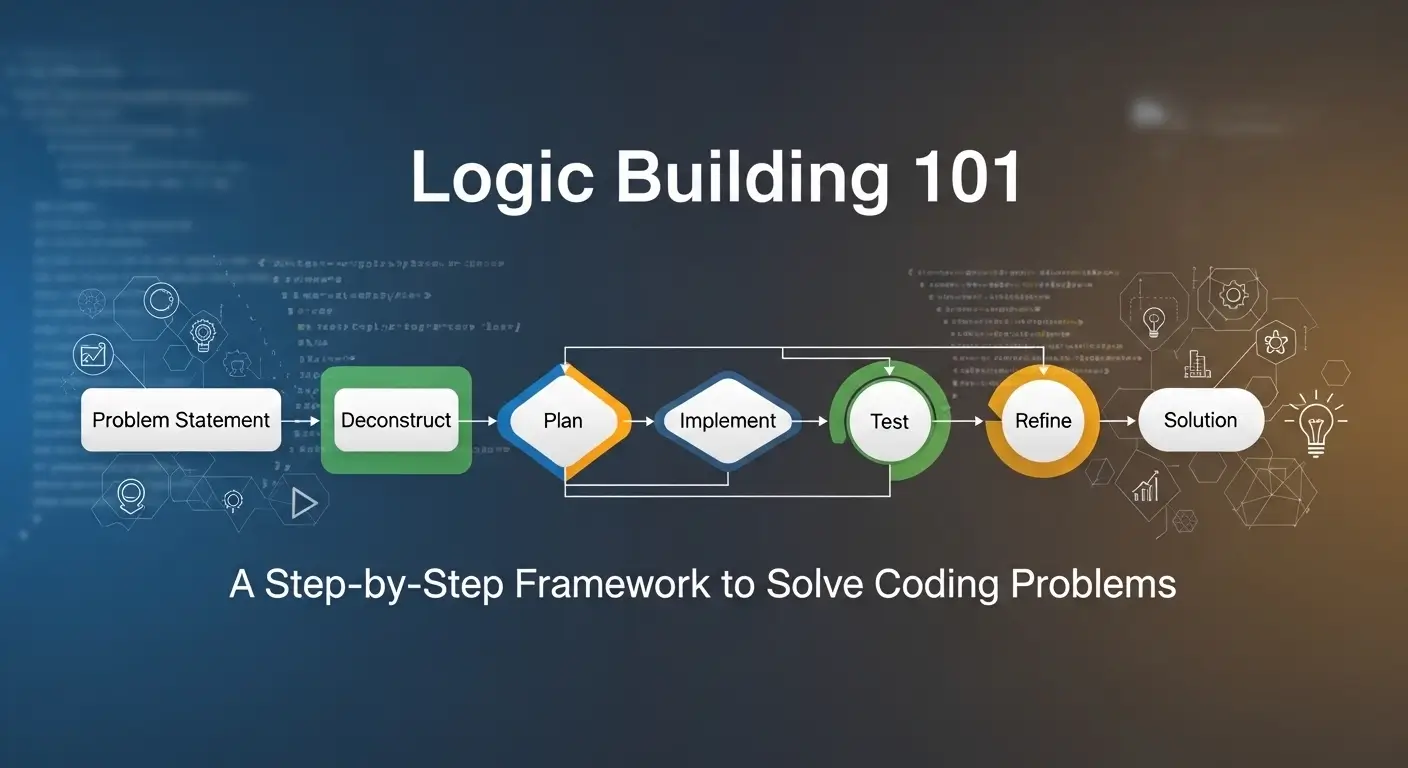
As you grow into senior and lead roles, understanding how to structure larger applications becomes critical. This is also where your problem-solving fundamentals really show — developers who have invested time in logic building and problem-solving frameworks find it significantly easier to reason through complex architectural decisions.
Patterns worth knowing:
Repository Pattern — Abstracting data access behind interfaces. Makes testing easier and lets you swap data sources without changing business logic.
Service Layer — Keeping controllers thin and moving business logic into dedicated service classes.
Event-Driven Architecture — Using Laravel's event system (or dedicated message brokers like RabbitMQ or Kafka for larger systems) to build loosely coupled systems.
CQRS (Command Query Responsibility Segregation) — Separating read and write operations. Overkill for small apps, genuinely useful for complex domains.
Domain-Driven Design (DDD) — Organizing code around business domains rather than technical concerns. Laravel has a growing community around DDD approaches.
The Honest Truth About This Roadmap
You do not need to master all of this before getting a job or shipping a project. The way to use this roadmap is as a progression — know where you are, know what comes next, and spend focused time on the next layer.
Most PHP developer job postings in 2026 want: Laravel, REST APIs, queue experience, basic Docker knowledge, and version control. That is the baseline. Everything beyond that — AI integrations, advanced cloud architecture, vector databases — is what makes you genuinely hard to replace.
If you are still figuring out whether a developer career makes sense for you at all, our honest take on whether coding is still a good career in 2026 might be worth reading alongside this roadmap. And once you have committed to the path, the placement preparation roadmap for final year students can help you structure your job-hunting alongside learning.
The developers who are building the most interesting things right now are the ones who treat PHP not as a limitation but as a solid, boring-in-the-best-way foundation. And on top of that foundation, they are layering modern tooling, cloud infrastructure, and AI capabilities.
Start where you are. Build something. Deploy it. Then go learn the next thing.
Summary of Key Skills by Priority:
| Priority | Skill | Why It Matters |
|---|---|---|
| Must-have | Core PHP 8.x, OOP, Composer | Foundation for everything |
| Must-have | Laravel (deep) | Industry standard |
| Must-have | REST API development | Every backend role needs this |
| Must-have | Git and version control | Non-negotiable |
| High | Queues and background jobs | Performance and UX |
| High | Redis caching | Scalability |
| High | Docker basics | Consistent deployments |
| High | SQL and Eloquent at depth | Data is the product |
| Growing | AI API integrations | The skill gap is real |
| Growing | Cloud deployment (Forge/Vapor/AWS) | Ownership of the full stack |
| Senior | Architecture patterns | Building systems, not just features |
| Senior | Vector DBs and RAG | Next frontier for PHP backend devs |
Frequently Asked Questions (FAQs)
Q1: What is the PHP developer roadmap for 2026?
The PHP developer roadmap for 2026 starts with Core PHP 8.x and OOP, then Laravel, REST APIs, queues, Redis, and Docker. Senior skills include cloud deployment, AI API integrations, and architecture patterns like CQRS and DDD.
Q2: Is PHP still worth learning in 2026?
Yes. PHP 8.x is modern and performant. Laravel is one of the most active frameworks in any language. PHP developers with skills in Laravel, Docker, queues, and AI integrations are in strong demand globally.
Q3: How long does it take to become a PHP developer in 2026?
A beginner practicing 2–3 hours daily can reach a job-ready level in 6 to 9 months. Core PHP takes 2–3 months, Laravel and APIs another 3 months, and advanced skills like Docker and AI integrations develop over 12–18 months.
Q4: What skills do PHP developers need to know for AI integration in 2026?
PHP developers need to call LLM APIs (OpenAI, Claude) using Laravel's HTTP client, handle streaming via SSE, dispatch AI calls as queue jobs, and build RAG pipelines with vector databases like Pinecone or pgvector.
Q5: What is the difference between a junior and senior PHP developer skill set in 2026?
Juniors know Core PHP, basic Laravel, REST APIs, and Git. Seniors understand Laravel's service container, event-driven architecture, Horizon, Redis strategies, Docker, CI/CD, cloud deployment, and AI integrations. Seniors can architect full systems.
Related Tags:
PHP developer roadmap 2026
PHP backend developer skills
Laravel developer roadmap
PHP AI integration
PHP Docker deployment
PHP Redis queue
modern PHP architecture
PHP API development
PHP cloud deployment
PHP developer career path
Hi, I'm Bikki Singh — Full Stack Developer, coding language trainer, and founder of CodePractice.in. With 5+ years of hands-on web development experience, I've trained 500+ students across India in Python, PHP, Java, C, C++, MySQL, and front-end technologies like HTML, CSS, and JavaScript. I started CodePractice.in with one goal: make programming education practical, not theoretical. Every tutorial and blog I write is built around real projects and interview scenarios — so learners don't just understand code, they can actually use it.


Read Coding Blogs on Different Topics
Learn Our Free Tutorials on

Submit Your Reviews